25 Japandi Home Office Ideas to Create Your Calm, Productive Haven
Modern work culture often demands long hours, deep concentration, and constant mental engagement. A Japandi home office responds to these demands not with excess, but with balance. Combining Japanese minimalism’s respect for space and imperfection with Scandinavian warmth and functionality, Japandi design creates a work environment that supports clarity, calm, and sustainable productivity.
Below, each Japandi home office idea is explained in greater depth, so you can understand not just what to do—but why it works.
1. Neutral Color Palettes for Visual Calm
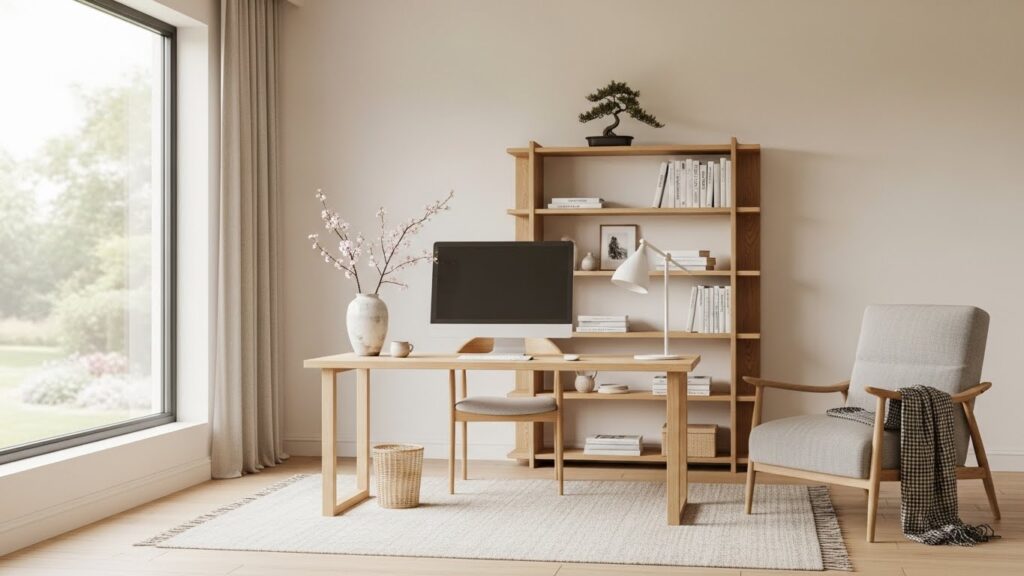
Neutral color palettes are the foundation of Japandi design because they quiet the visual field. Shades such as warm white, stone, sand, greige, and soft gray help reduce eye strain and mental fatigue during long work sessions. These tones reflect natural light gently rather than sharply, creating an atmosphere that feels open and breathable. In a Japandi home office, neutral walls allow furniture textures and natural materials to become the focal point instead of loud colors that distract concentration.
2. Natural Wood Desks with Clean Lines
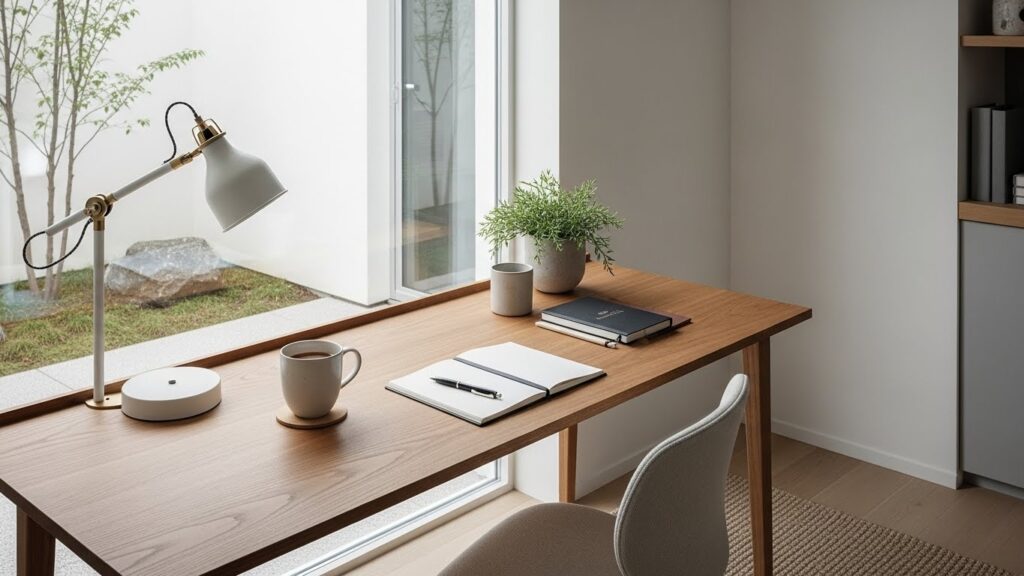
A Japandi desk is never overly decorative—it is intentional, grounded, and tactile. Solid wood desks made from oak, walnut, ash, or bamboo bring warmth and organic beauty to the space. Clean lines ensure the desk feels modern and uncluttered, while visible wood grain adds character rooted in nature. This balance of simplicity and texture helps the workspace feel calming yet inspiring, encouraging focused work without visual chaos.
3. Minimalist Layouts with Breathing Space
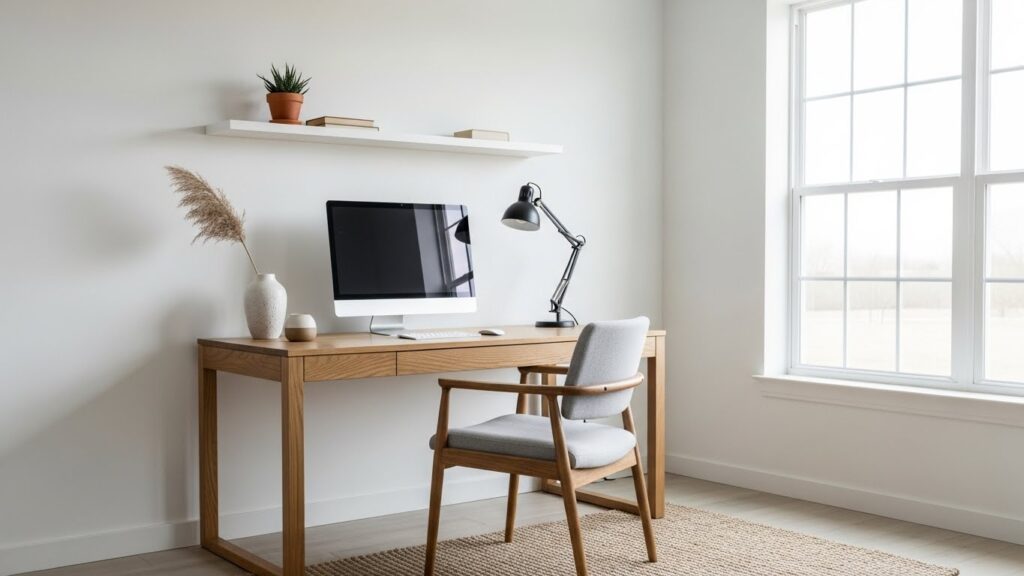
Japandi offices prioritize spatial balance. Furniture placement should allow negative space to exist, giving the room a sense of flow. This breathing space reduces overstimulation and helps the mind stay clear. Instead of filling corners with unnecessary furniture, Japandi design values restraint—allowing each element to exist comfortably without competing for attention.
4. Low-Profile Furniture for Grounded Energy
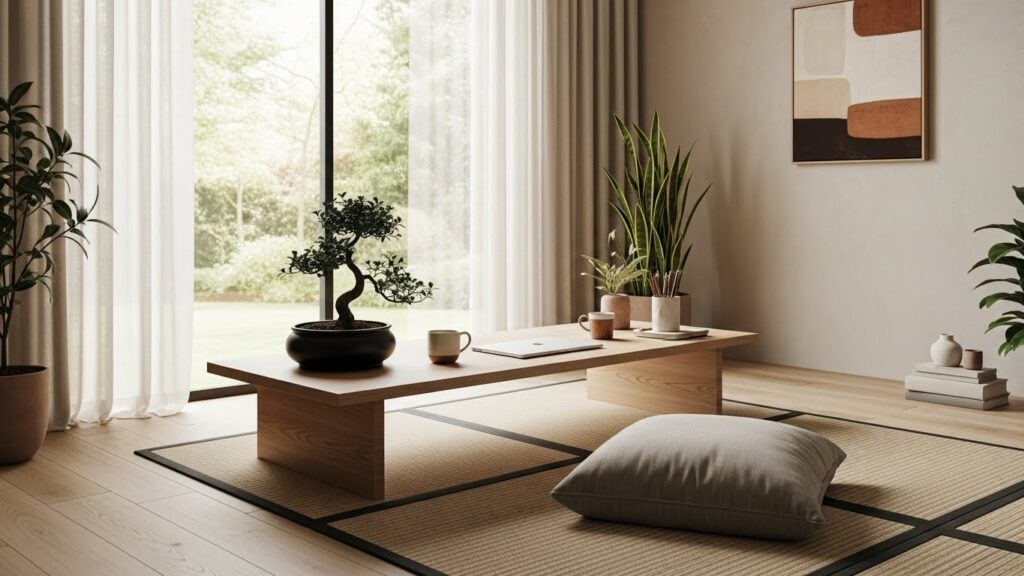
Low-profile furniture, inspired by traditional Japanese interiors, visually anchors the space. Desks, cabinets, and seating closer to the ground create a sense of stability and calm. This grounded energy subtly encourages slower, more intentional movement and thinking—ideal for deep work and creative tasks. Low furniture also makes small home offices feel more open and less crowded.
5. Soft, Diffused Natural Lighting
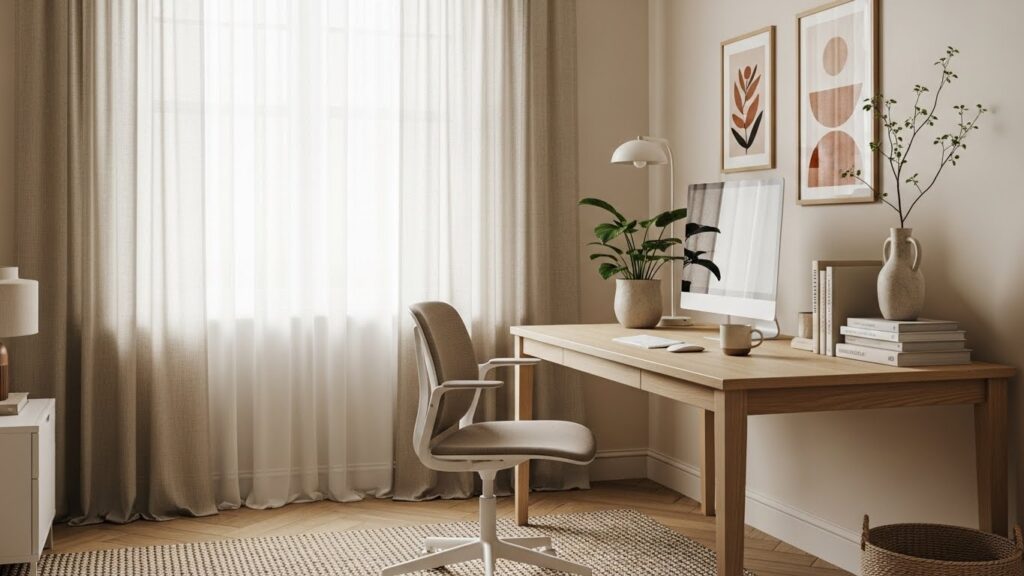
Natural light is central to Japandi design philosophy. Instead of harsh exposure, light should be filtered and gentle. Positioning your desk near a window while using sheer linen curtains or light wood blinds allows sunlight to enter without glare. This soft diffusion supports circadian rhythm, improves mood, and reduces reliance on artificial lighting during the day.
6. Warm Scandinavian Task Lighting
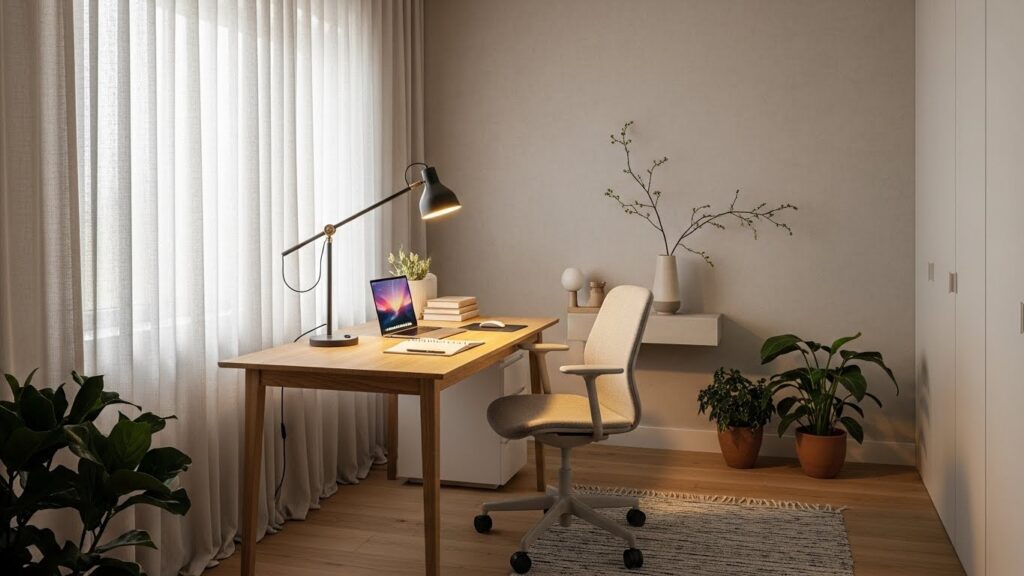
When artificial lighting is needed, Japandi offices favor warm, understated fixtures. Desk lamps with simple silhouettes and warm LED tones prevent eye fatigue and create a cozy atmosphere. Scandinavian-inspired lighting emphasizes function first, ensuring sufficient illumination while maintaining a calm visual presence that blends seamlessly into the room.
7. Decluttered Desk Surfaces
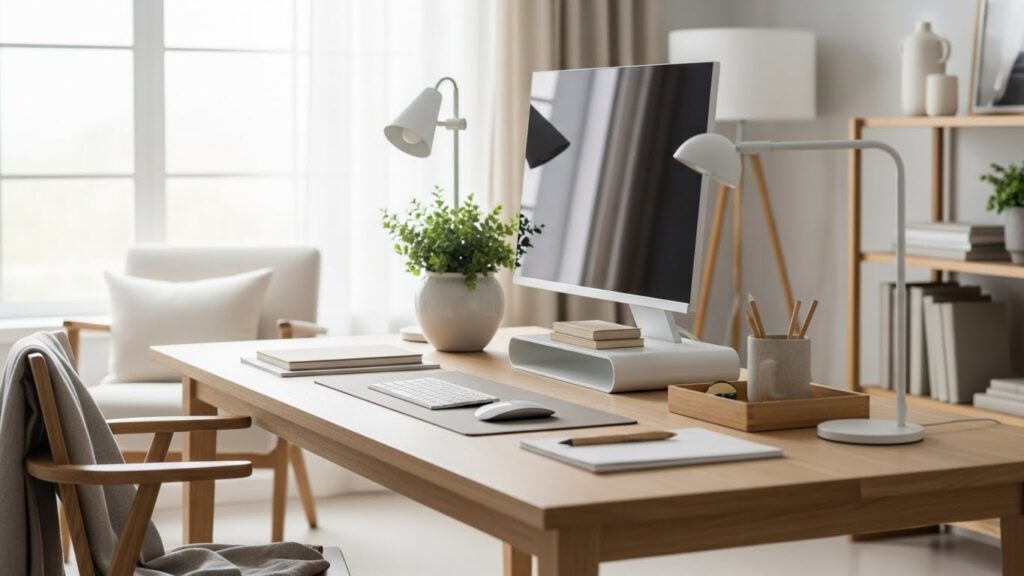
A clutter-free desk is essential to Japandi productivity. Visual clutter creates mental noise, which disrupts focus. Japandi design encourages keeping only essential tools on the desk—your computer, a notebook, and perhaps one thoughtfully chosen accessory. Everything else should be stored away, allowing the desk to act as a mental reset each time you sit down.
8. Built-In Storage with Flush Design
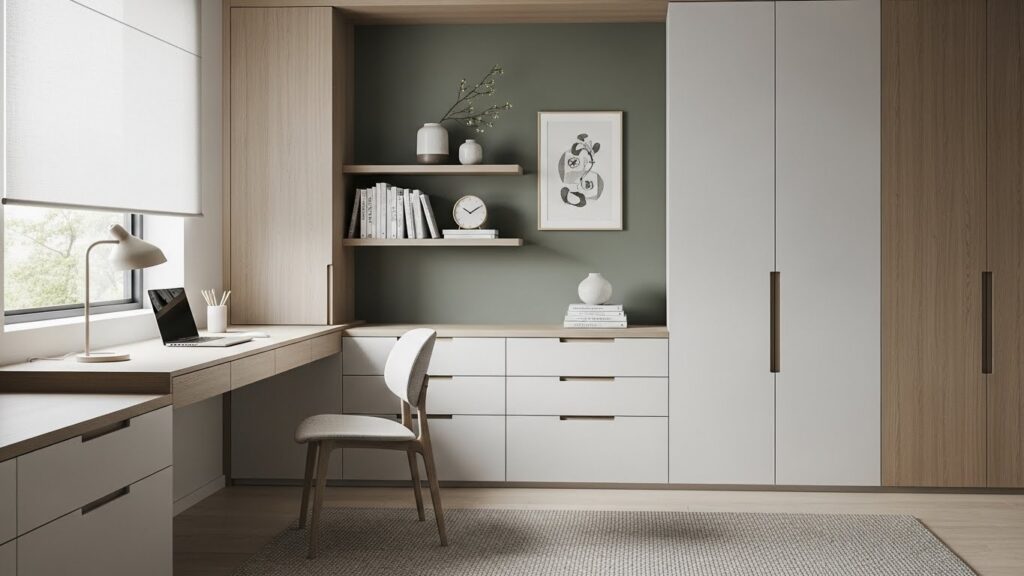
Storage in Japandi home offices is designed to disappear. Built-in cabinets and flush drawers maintain clean lines and uninterrupted surfaces. Handle-less doors or recessed pulls reinforce minimalism while ensuring functionality. This approach keeps practical items accessible yet hidden, preserving visual serenity.
9. Organic Textures for Softness
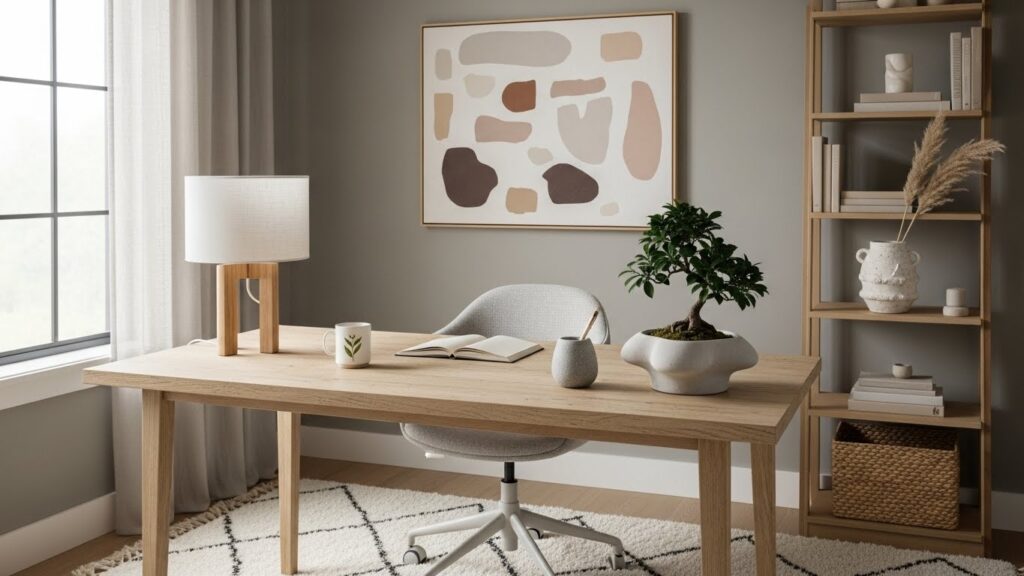
Minimalism can feel cold if not balanced correctly. Japandi interiors solve this with organic textures—linen curtains, woven baskets, wool rugs, and cotton upholstery. These materials introduce tactile warmth, making the office feel inviting and human. Texture replaces ornamentation, adding depth without clutter.
10. Muted Earth-Tone Accents
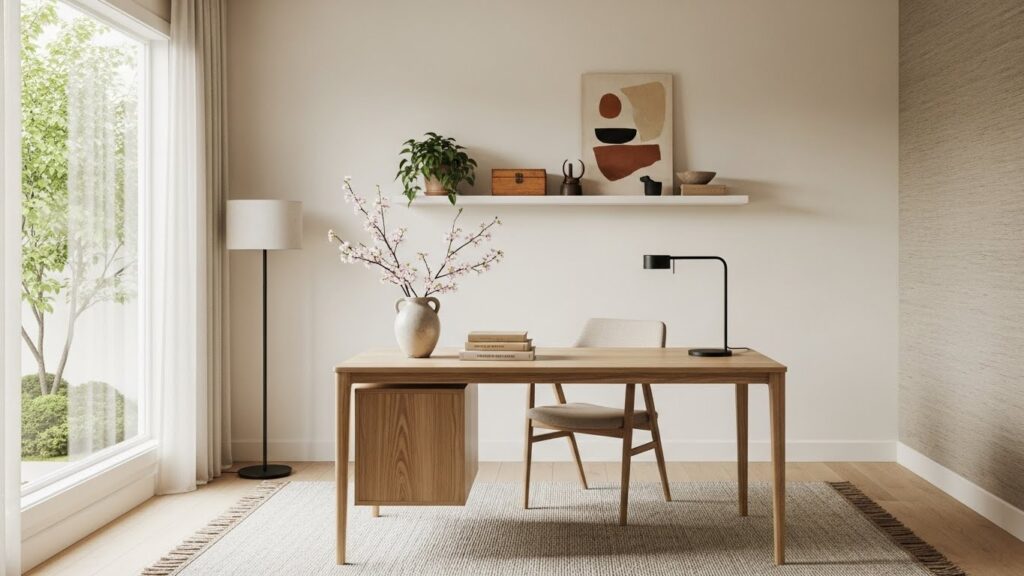
Rather than bold colors, Japandi offices use muted earth tones to create visual interest. Soft clay, warm brown, sage green, or charcoal accents ground the space and connect it to nature. These hues add richness while maintaining emotional calm, preventing the workspace from feeling sterile.
11. Japanese-Inspired Indoor Plants
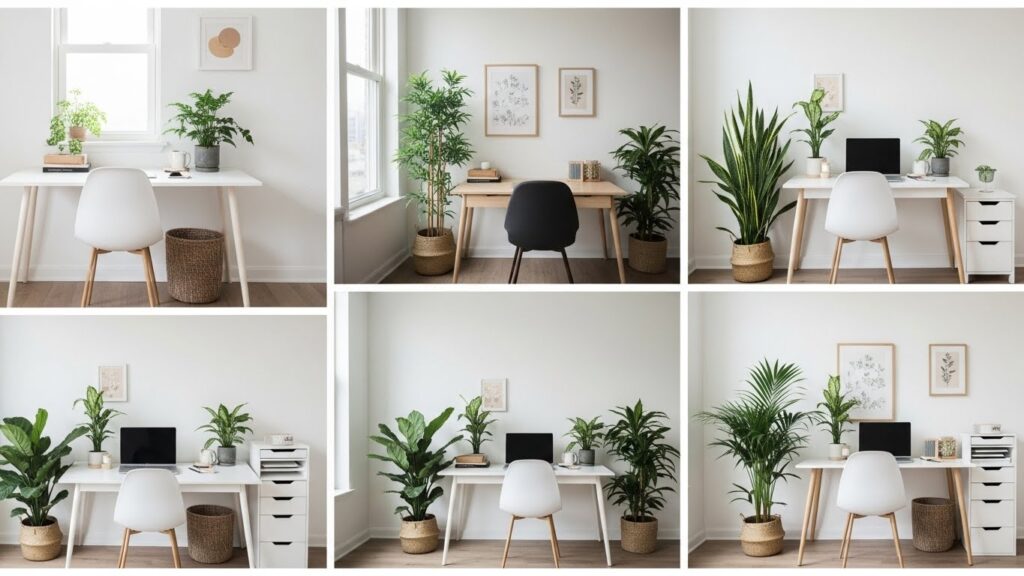
Plants bring life and balance into Japandi home offices. The focus is on sculptural, low-maintenance greenery such as bonsai, snake plants, ficus, or bamboo. These plants reinforce the connection to nature while improving air quality and reducing stress—key elements for sustained productivity.
12. Simple Wooden Shelving Displays
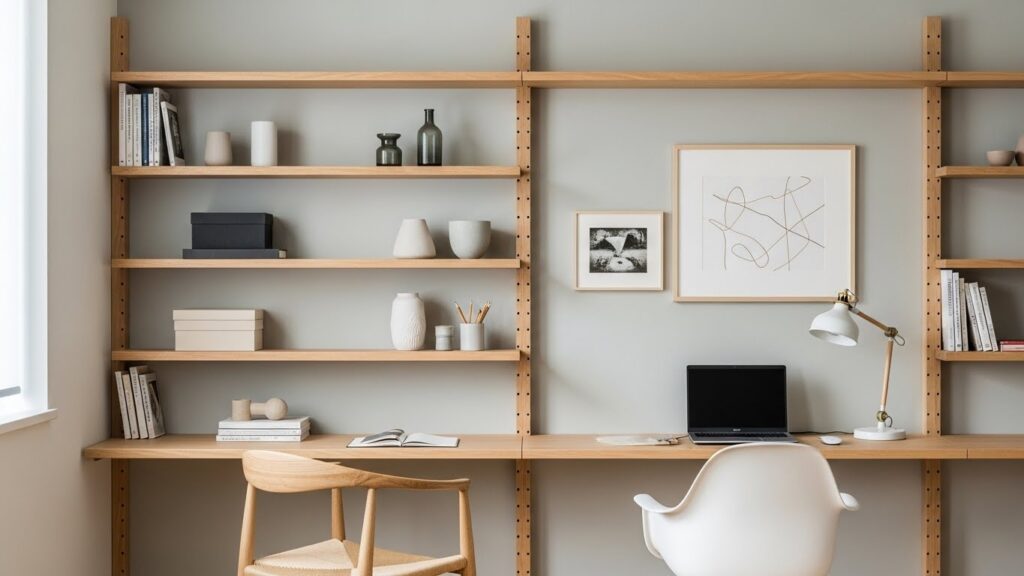
Open shelving should be curated with intention. Japandi shelving is not for decoration overload but for mindful display. A few handcrafted ceramics, neutral books, or natural objects provide visual interest while respecting minimalism. Every item should feel deliberate rather than decorative.
13. Textured Area Rugs for Comfort
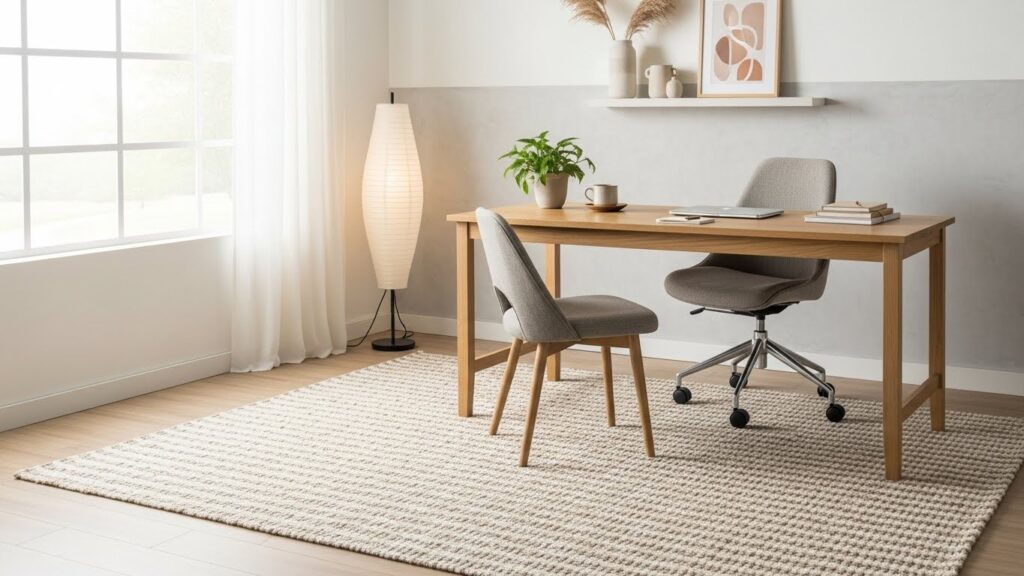
Area rugs in Japandi offices serve both functional and aesthetic purposes. Natural fiber rugs such as wool or jute add warmth, reduce noise, and visually define the workspace. Their subtle textures complement minimalist furniture while enhancing comfort during long working hours.
14. Calm Wall Art with Purpose
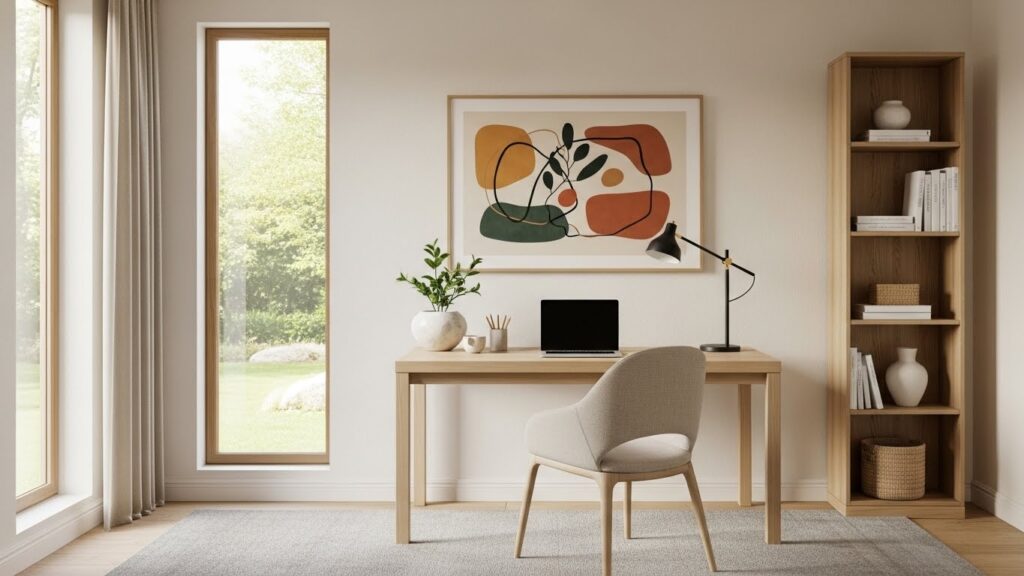
Wall art in Japandi spaces is restrained and meaningful. Abstract line art, ink illustrations, or soft landscapes promote calm without visual dominance. One or two pieces are sufficient—allowing the walls to breathe while still offering creative inspiration.
15. Ergonomic Seating with Natural Finishes
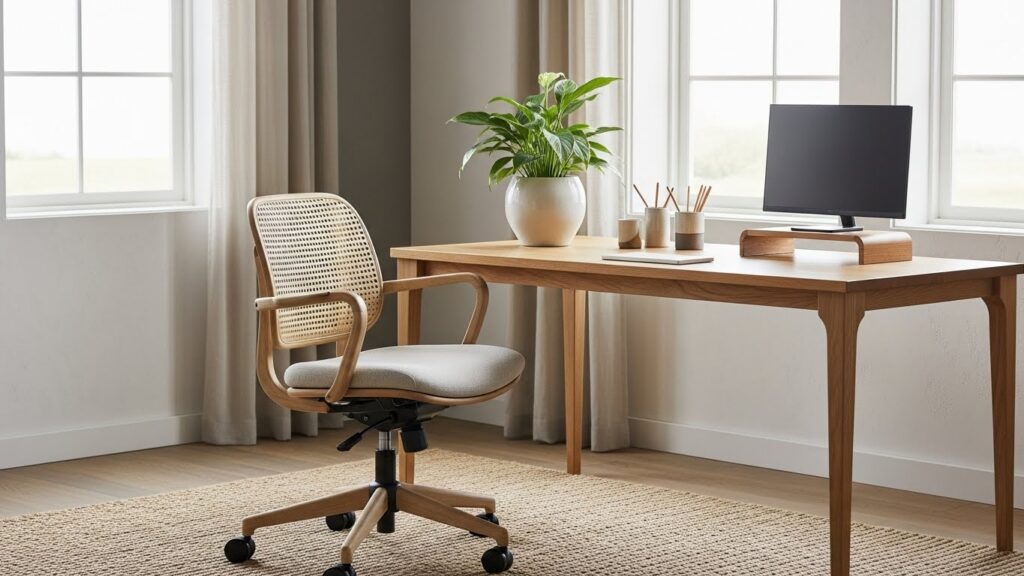
Comfort is essential, but Japandi design ensures ergonomics don’t compromise aesthetics. Chairs with neutral fabric upholstery, wooden frames, or muted finishes blend seamlessly into the space. Good posture support paired with soft textures encourages longer, healthier work sessions.
16. Matte Finishes Over Glossy Surfaces
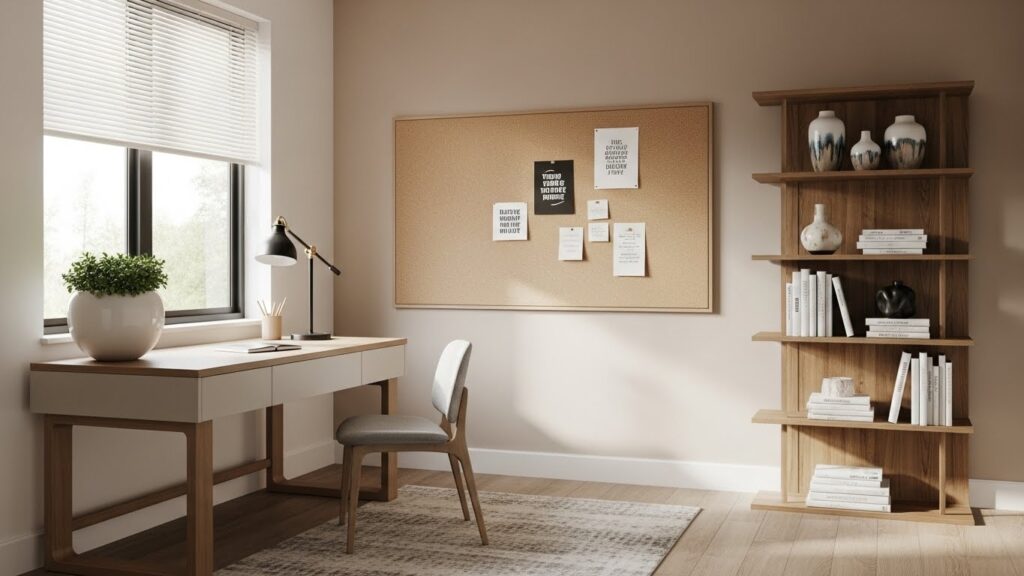
Japandi interiors favor matte finishes because they absorb light softly rather than reflecting it harshly. Matte desks, cabinetry, and accessories maintain visual calm and reduce glare—especially important for screen-heavy work environments.
17. Sliding Doors or Wooden Screens
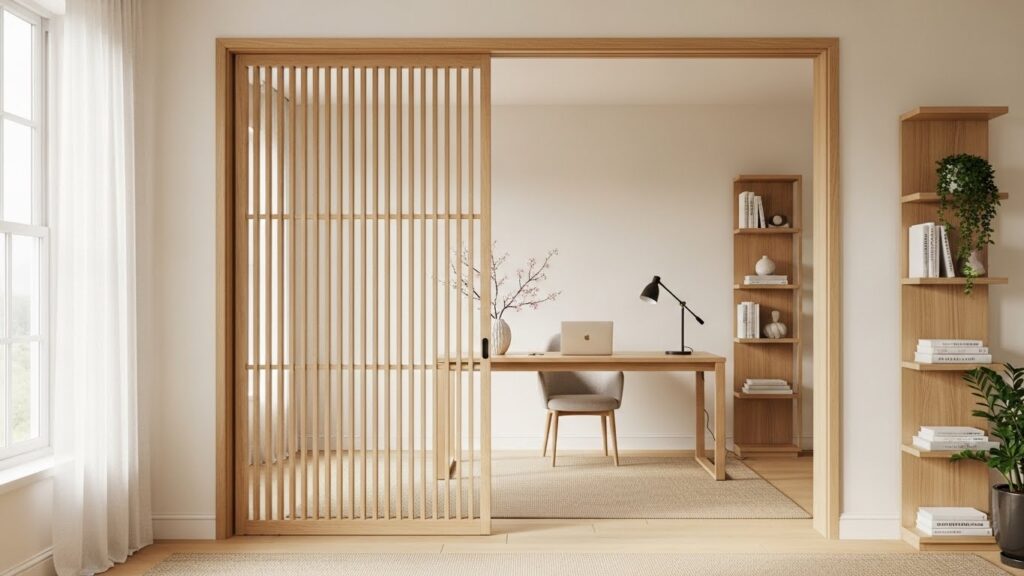
For shared living spaces, sliding doors or wooden slatted screens provide separation without heaviness. Inspired by Japanese shoji screens, they maintain privacy while allowing light and airflow, reinforcing openness and tranquility.
18. Minimal Wall Clocks and Timepieces
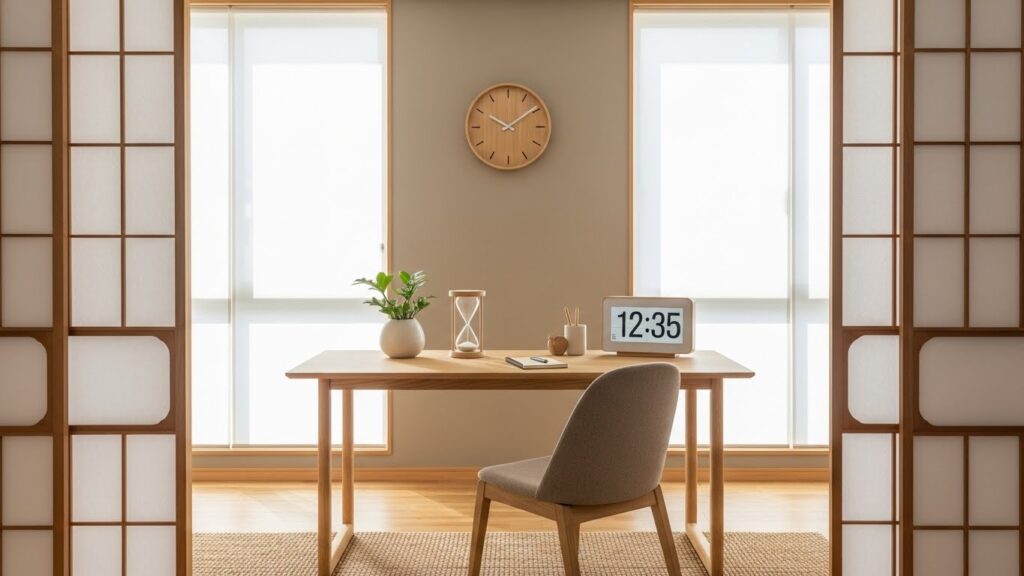
Time awareness is important, but Japandi design keeps it subtle. Simple wall clocks in wood, stone, or metal maintain functionality without distraction. Their quiet presence reinforces order and rhythm in the workspace.
19. Thoughtful Cable Management
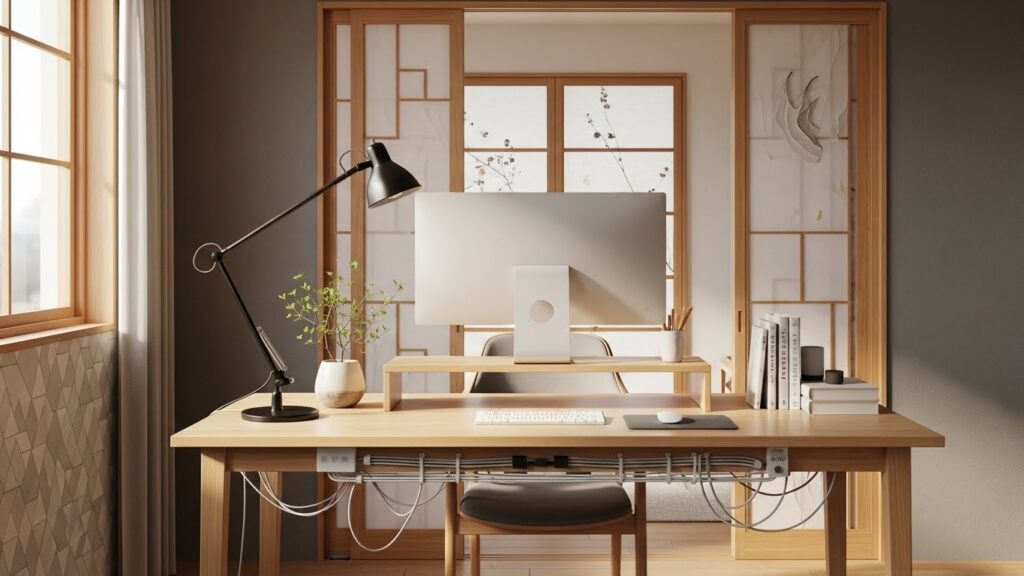
Visible cables disrupt visual harmony and mental focus. Japandi offices emphasize concealed wiring, under-desk trays, and wooden cable organizers. A clean visual line allows the workspace to feel intentional and distraction-free.
20. Soft Linen or Cotton Curtains
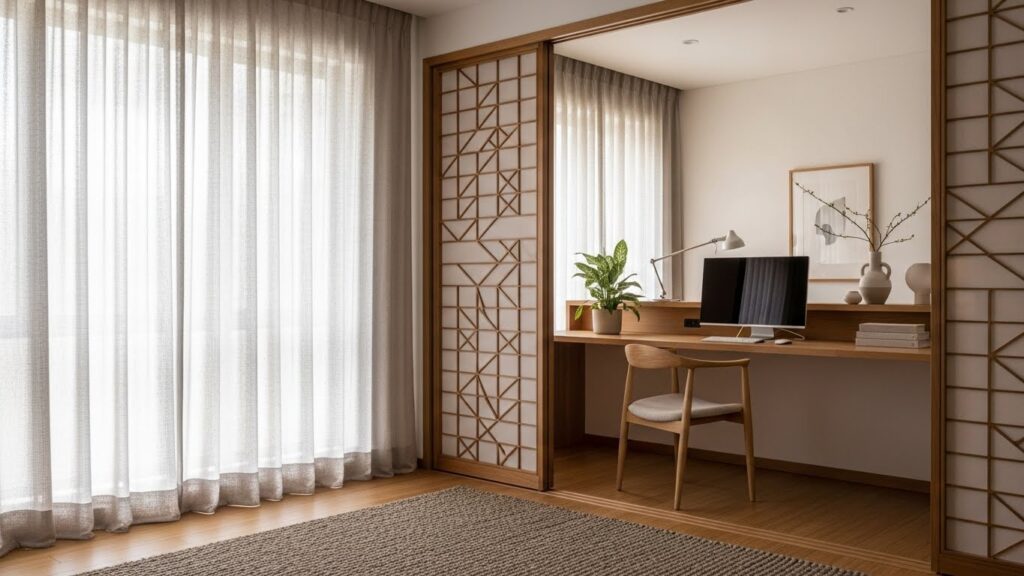
Window treatments in Japandi offices should feel light and natural. Linen or cotton curtains filter light gently while adding softness and warmth. Their subtle movement enhances the room’s calming energy.
21. Balanced Symmetry for Visual Harmony
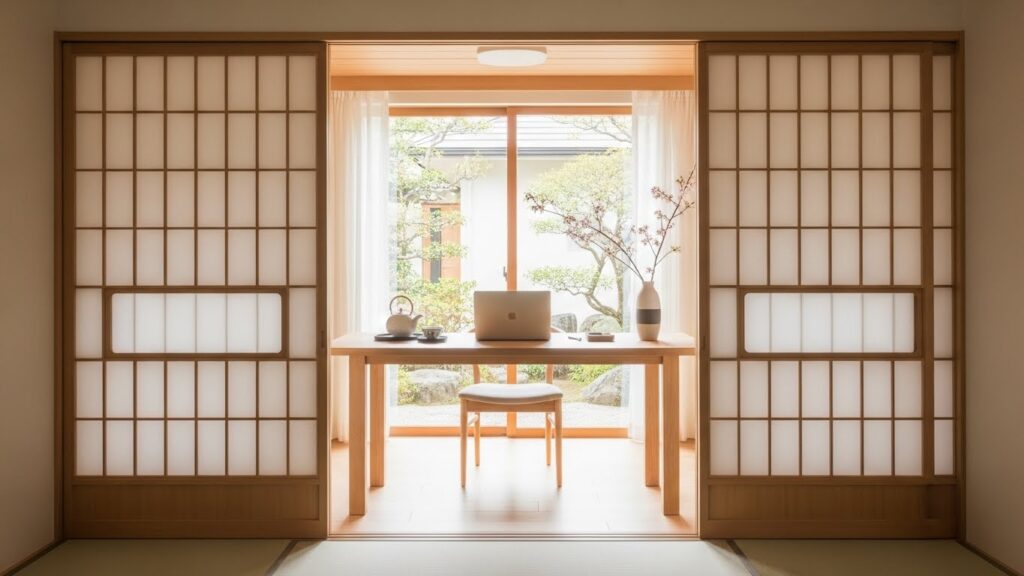
Japandi design values balance over perfection. Symmetrical desk placement, evenly spaced shelving, and aligned furniture create visual harmony that promotes mental stability and focus.
22. Functional Accessories Only
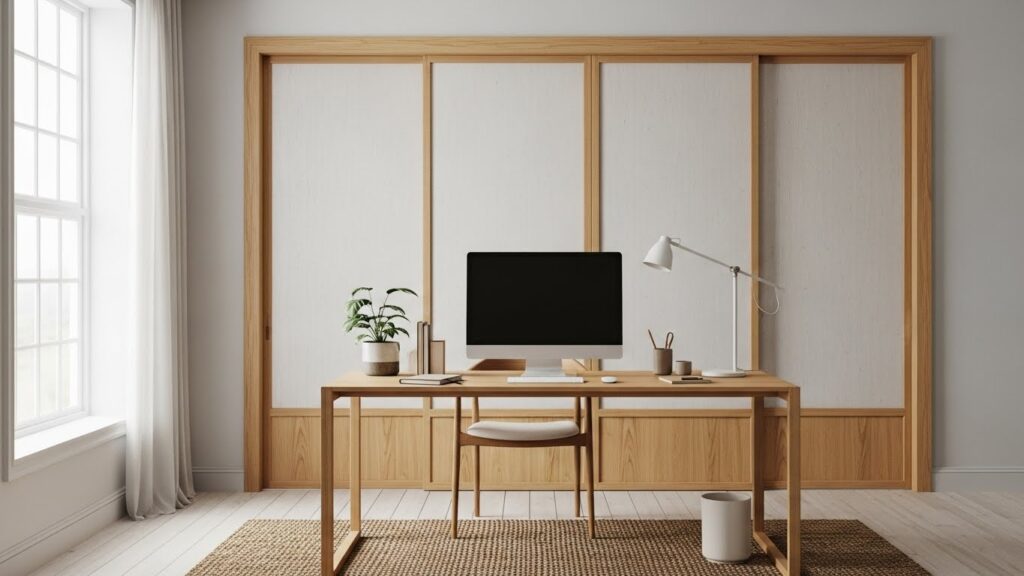
Accessories must earn their place. Japandi offices avoid excess decor, focusing instead on tools that support productivity. Each object should feel purposeful, reinforcing clarity and intentional living.
23. Warm Accent Walls in Natural Shades
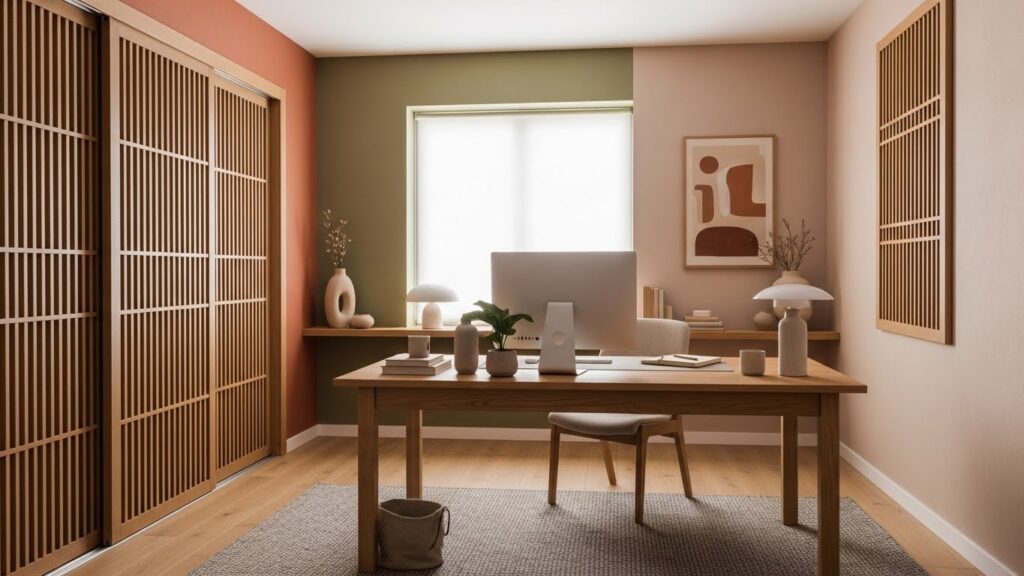
Accent walls in Japandi offices are understated yet impactful. Warm clay, muted charcoal, or earthy beige adds depth while preserving calm. These shades provide contrast without overpowering the room.
24. Quiet, Neutral Flooring Choices
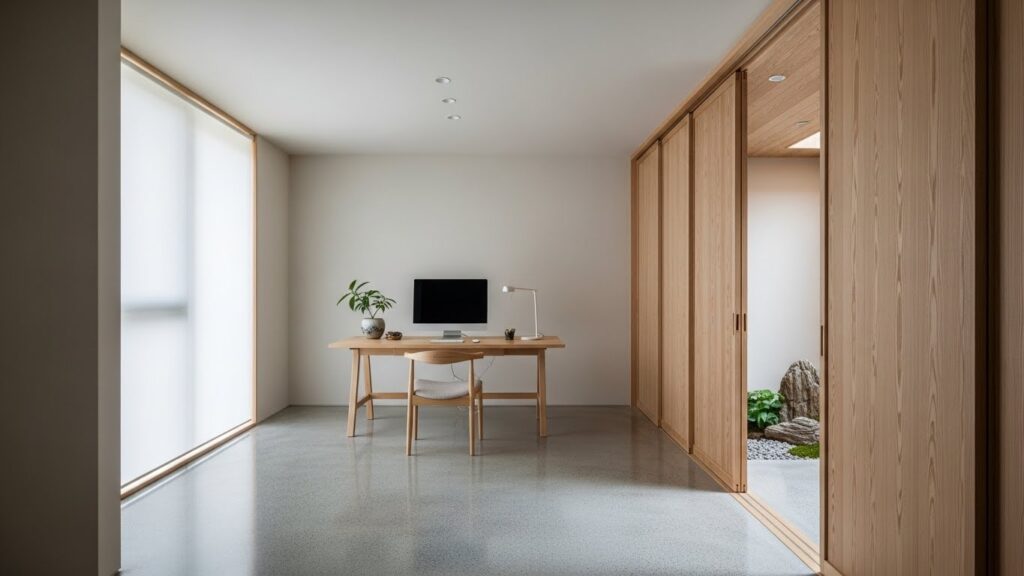
Flooring sets the tone for the entire workspace. Light wood, natural stone, or neutral laminates enhance simplicity and timelessness. These surfaces create continuity with the rest of the Japandi aesthetic.
25. A Space That Encourages Mindful Work
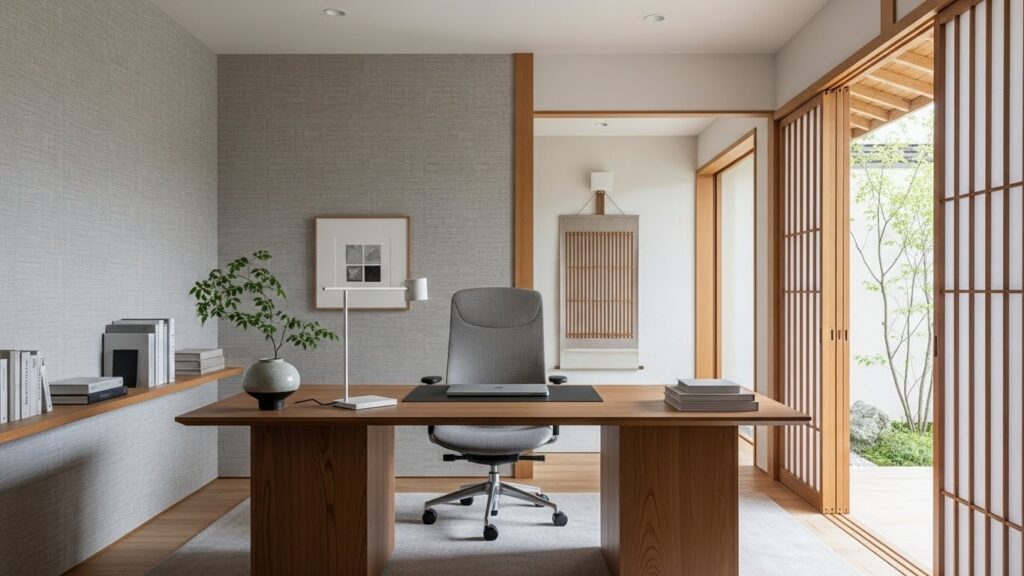
At its core, a Japandi home office is about intention. It’s a space that encourages slower thinking, deeper focus, and emotional balance—supporting productivity without burnout.
Final Reflection
A Japandi home office is not just designed—it’s curated. Every element works together to create a calm, grounded environment where focus flows naturally. By embracing simplicity, warmth, and functionality, you transform your workspace into a haven that nurtures both creativity and clarity.